
While ordering custom t-shirts in Omaha, the first thing that you need to do is to decide on a method for printing. At this point, options tend to be reduced to the three most popular options; screen printing, sublimation printing, and embroidery. All the alternatives have dissimilar appearances and feel, are better suited to certain types of fabric and differ in durability and price.
When comparing Omaha t-shirt printing services, knowing the key facts about these printing methods will help to avoid such pitfalls as cracked ink, a loss of color, or a logo that does not fit your expectations. In this blog, we will compare all these methods to help you decide the best printing method based on your use.
Screen Printing (Best for Bold, High-Volume Orders)
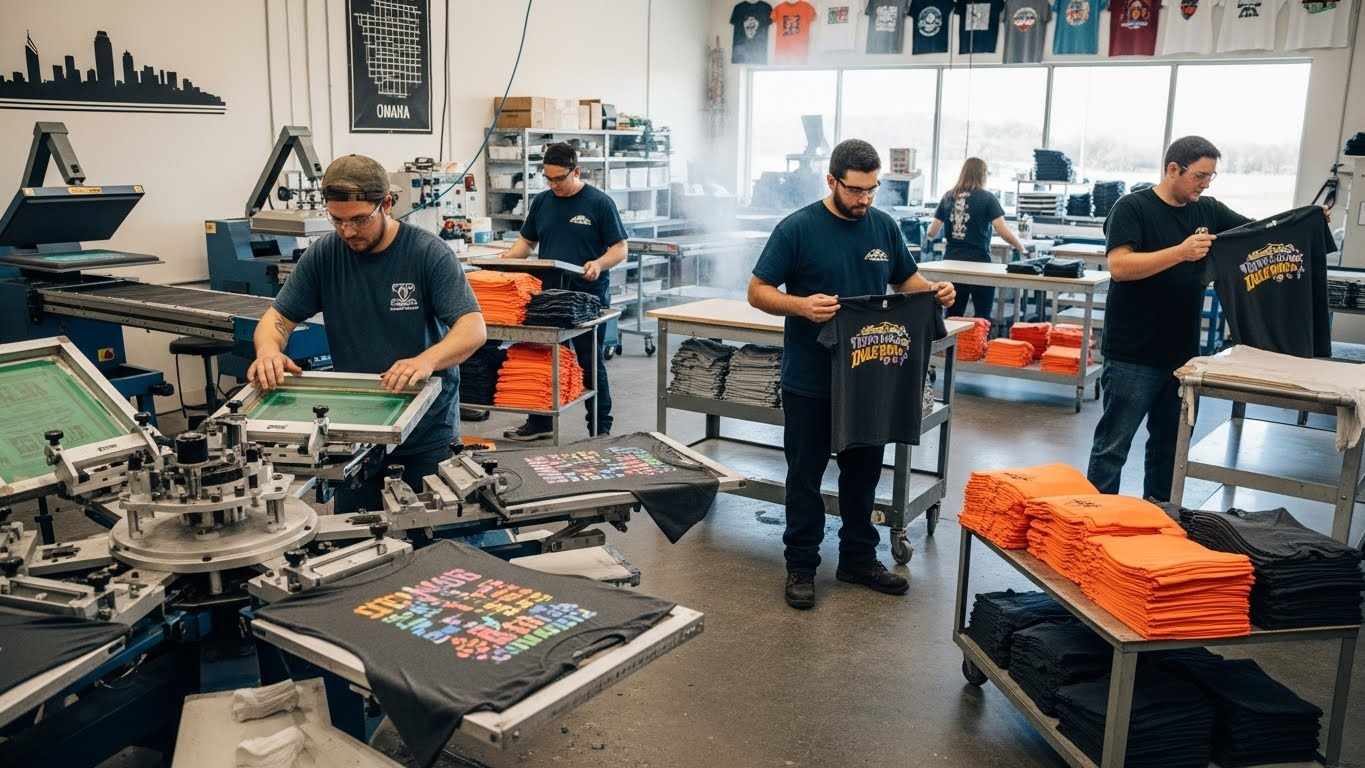
Best-quality t-shirt screen printing is a conventional option for custom t-shirts in Omaha since it produces colorful and opaque designs that become noticeable on both light and dark clothes. In this method, ink is passed through a stencil and onto the fabric. Furthermore, the t-shirt is then cured and washed before it can be used.
Pros and Trade-Offs
Screen printing typically offers strong color payoff and long wear, but setup steps can make very small orders less cost-effective. Designs with many colors or gradients can increase complexity compared with other t-shirt printing methods in Omaha.
Sublimation Printing (Best for All-Over Color on Polyester)
Sublimation uses heat to turn dye into gas (without turning it liquid) that bonds with the fabric fibers, creating a smooth design you can't "feel" on the shirt. This method is popular in performance apparel and photographic prints.
Pros and Trade-Offs
Sublimation won't crack or peel because the color becomes part of the fabric. However, it generally requires polyester (or high-poly blends) and doesn't perform the same way on dark cotton tees.

Embroidery (Best for Premium Logos and Uniforms)
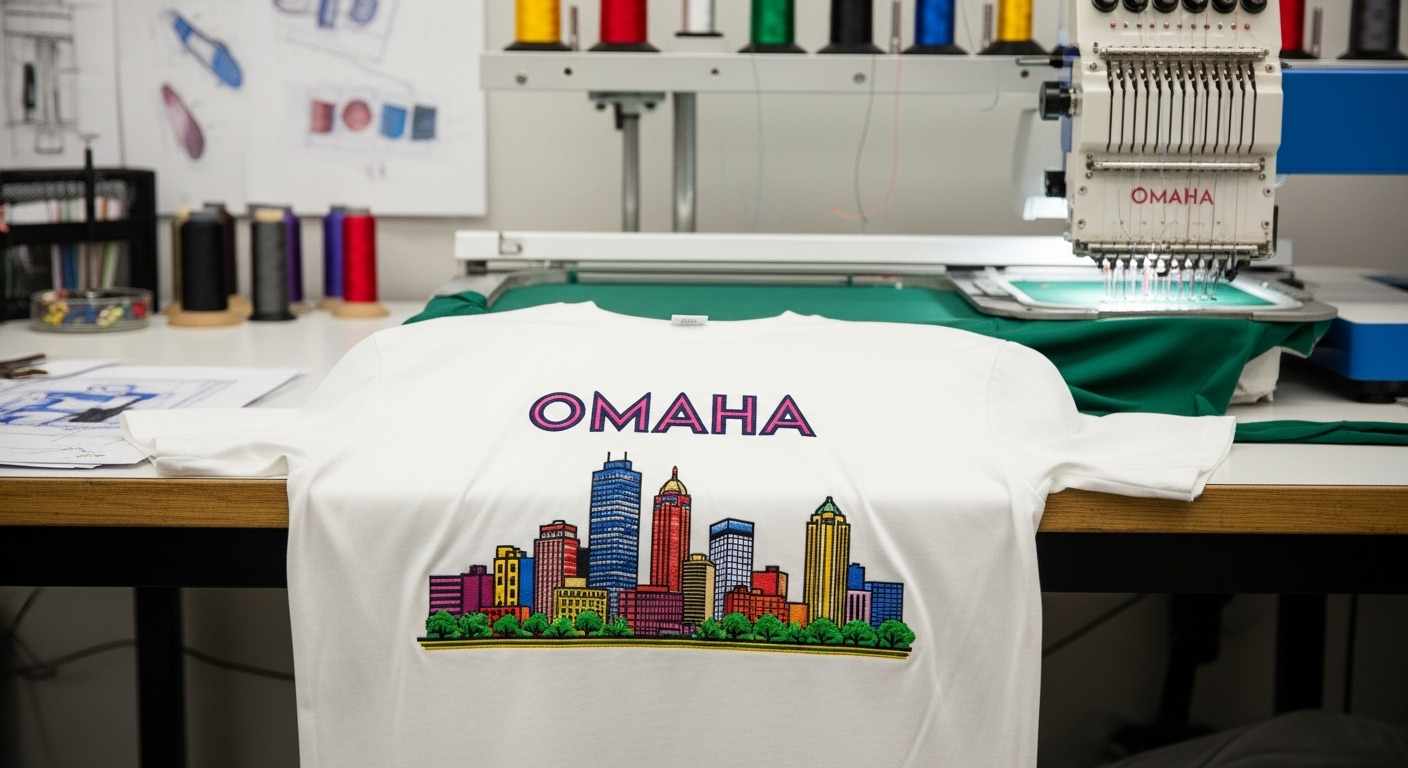
If you wish to add a professional and classy look to your custom t-shirt, choosing embroidery as the printing method is the way to go. For a polished look on polos, hats, hoodies, and workwear, embroidery is a top contender in Omaha t-shirt printing.
Pros and Trade-Offs
Embroidery is extremely durable and looks premium, but tiny text and complex gradients don't translate as cleanly as printing. It can also feel heavier on thin tees compared with screen print or sublimation.
Quick Checklist: How to Choose the Right Method
Use this step-by-step checklist before you place an order with any t-shirt printing shop:
Pick your fabric first: cotton (screen print), polyester (sublimation), heavier knits (embroidery).
Decide the design style: bold logo (screen), photo/gradient (sublimation), stitched emblem (embroidery).
Check wear conditions: high-heat jobs and workwear often favor embroidery or quality screen printing.
Estimate quantity: larger runs usually favor screen printing value; small runs may favor other approaches.
Confirm placement needs: sleeves, hats, and polos often suit embroidery; full-front color suits printing.

Final Words
Although all things are shifting on the digital platform, personalized t-shirts have remained critical in brand awareness and marketing. Custom t-shirts are the key to a successful brand to a great extent, particularly in the context of a small business environment like Omaha. However, when there are a variety of printing methods, there may be a challenge to find the method suitable for you. Thus, it is imperative to be aware of the functioning of every printing technique and its application.
In case you are in need of a local and trustworthy provider of custom t-shirts in Omaha, you can always consider Omaha Print Shop to have all your printing issues.
FAQs
What's the most durable option for custom t-shirts in Omaha?
Embroidery is typically the most durable, followed closely by high-quality screen printing. Sublimation is also very durable on polyester because the dye bonds to the fibers.
Which method is best for small orders?
It depends on the design and garment, but small orders can be easier with embroidery (simple logos) or sublimation (on polyester) since screen printing may have setup steps that affect pricing.
Can sublimation be used on cotton shirts?
Not in the standard way, sublimation works best on polyester or high-poly blends. For cotton, screen printing is usually the more reliable choice.
What looks most "premium" for business apparel?
Embroidery often looks the most premium on polos, jackets, and hats. For tees, a clean screen-printed logo can also look high-end when properly cured and placed.
How do I get accurate colors across shirts?
Ask for proofs and, if possible, a physical sample. For screen printing, confirm ink matching; for sublimation, confirm the fabric color and polyester content; for embroidery, confirm thread colors and stitch density.

Write a comment ...